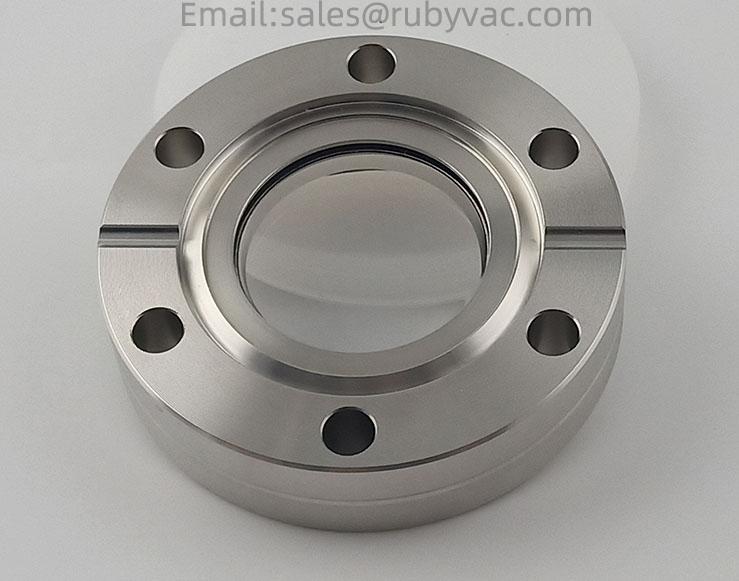
Lately, the area of vacuum technology has witnessed significant advancements, particularly in the realm of viewports. These vital components play a crucial role in enabling observations and assessments in different scientific and industrial processes where preserving a vacuum is necessary. The importance of vacuum viewports cannot be overlooked, as they function as obstacles that allow for sight access to vacuum environments while minimizing contamination and preserving pressure integrity.
As novel materials and fabrication techniques surface, the applications of vacuum viewports continue to expand across various sectors. From high-energy physics experiments and semiconductor manufacturing to aerospace testing and medical imaging, the adaptability of vacuum viewports is becoming increasingly apparent. As we examine the future of vacuum technology, it is vital to understand the developments shaping the development and use of viewports, which are changing how we connect with and study the small-scale worlds contained within vacuum chambers.
Advancements in Material Science
Recent advancements in material science have notably enhanced the performance of vacuum viewports. Improvements in the production of glass, such as the creation of low thermal expansion glass, facilitate for improved optical clarity and resistance to temperature fluctuations. These materials are engineered to endure the challenges of various industrial environments, making sure that vacuum viewports can preserve integrity and performance under extreme conditions.
Additionally, new composite substances have emerged that provide superior strength relative to weight compared to conventional materials. These composites allow the creation of slimmer and more lightweight vacuum windows without sacrificing robustness. This is especially valuable in contexts where space and mass are key considerations, such as in aviation and high-tech laboratories.
Furthermore, the integration of nano-technology into the production of vacuum windows has created new opportunities. Nanocoatings can be used to enhance scratch resistance and diminish reflection of light, thus boosting viewability. Such innovations not merely lengthen the duration of vacuum windows but also improve their capabilities in high-demand settings, rendering them ever more versatile across various applications.
Cutting-edge Concepts and Uses
Vacuum windows are developing noticeably, demonstrating advanced designs that boost their capabilities while catering to the demands of various industries. In research-focused research, these viewports are vital for experiments requiring regulated conditions. For example, innovative materials are now being used to create ultra-thin and super durable glass that allows for maximum light transmission while upholding robust vacuum integrity. This development is notably advantageous in fields such as measurement science, where exact readings are important.
In the area of fabrication, vacuum viewports are gaining uses in the production of microchips and additional tech components. As the industry trend shifts towards compact designs, viewports crafted with incorporated heating elements or temperature sensors deliver manufacturers with real-time surveillance options. This not only helps maintain optimal environmental conditions within vacuum chambers but also enhances the quality and productivity of the produced devices.
Moreover, the implementation of smart technologies into vacuum viewports is prepared to change their use. By incorporating sensor technology and IoT linkage, these viewports can offer data related to pressure metrics, temperature fluctuations, and even the health of the structure. This allows for preventative care and higher efficiency in processes, lowering downtime and improving overall system reliability. As these uses continue to expand, the importance of vacuum viewports will become increasingly essential to diverse industries, leading to future innovations.
Issues and Prospects
Despite the advancements in vacuum viewports, several issues exist that need to be addressed to enhance their functionality and dependability. One significant concern is the vulnerability of materials to degradation over time, particularly under harsh conditions such as high energy levels or contact to radiation. These factors can lead to compromised structures or changes in optical properties, which could jeopardize the integrity of the vacuum environment and the quality of observations.
In the future, advancements in materials science are expected to play a key role in overcoming these challenges. The development of advanced polymers and coatings could provide enhanced durability while preserving optical clarity. Additionally, incorporating nanotechnology into the construction of vacuum viewports may yield surfaces that resist to thermal shock and deterioration, thus extending their operational lifespan in demanding environments like space exploration or high-energy physics experiments.
Another direction for enhancement is the inclusion of smart technologies into vacuum viewports. This could involve monitoring devices that track the condition of the viewport in real time, providing notifications for any possible failures. Adding advanced monitoring systems would not only enhance safety but also allow for predictive maintenance, ultimately leading to more effective use of vacuum systems across multiple uses.